Leave Your Message

China Top 10 Green Silicon Carbide Suppliers?

Green Silicon Carbide is becoming an important abrasive and advanced ceramic material for demanding industrial applications. Its sharp crystal structure supports cutting, grinding, polishing, refractory production, and technical ceramics. However, supplier quality can differ significantly. Price alone rarely reveals the full picture.

This guide examines China’s top 10 Green Silicon Carbide suppliers through practical purchasing criteria. These include raw material selection, furnace control, silicon carbide content, grain consistency, magnetic separation, packaging, and export experience. We also consider whether suppliers provide laboratory reports, ISO certifications, stable production capacity, and responsive technical support. Small details matter. A clean 25-kilogram bag, for example, can prevent contamination during warehouse handling.

Ceramics researcher Dr. Ralf Riedel has described silicon carbide as “a family of polytypes with different properties,” highlighting why material specifications deserve careful attention. That perspective is useful when comparing suppliers that advertise similar purity levels but produce different performance results. Buyers should review particle-size distribution, bulk density, color, hardness, and application testing before making a decision.

The ranking is intended as a practical starting point, not a permanent verdict. No supplier list is perfect. Market conditions, energy costs, equipment upgrades, and customer feedback can change quickly. Some manufacturers may perform strongly in large-volume orders but offer limited support for smaller batches. Others may provide excellent technical service while charging more. By comparing documented capabilities with real purchasing needs, readers can identify the Green Silicon Carbide supplier that offers the most dependable balance of quality, consistency, and value.
China Top 10 Green Silicon Carbide Suppliers?

Green Silicon Carbide: Properties, Uses, and Industry Applications

Green silicon carbide is a high-purity abrasive made from petroleum coke and silica in an electric resistance furnace. Its sharp crystal structure cuts hard materials efficiently. It also offers high thermal conductivity, chemical stability, and a Mohs hardness near 9.5. These properties support grinding wheels, precision lapping, refractory mixes, and ceramic components.

The U.S. Geological Survey’s Mineral Commodity Summaries 2024 identifies silicon carbide as an important manufactured abrasive and refractory material. Demand also connects with advanced power electronics. Yole Group’s 2024 power SiC market analysis reports continued growth in silicon-carbide devices, driven by electric vehicles, charging systems, and renewable-energy inverters. However, device-grade material and abrasive-grade green silicon carbide require different purity controls. They should not be treated as interchangeable.

Tips: Check grain size, purity, bulk density, and magnetic contamination before purchasing. Ask for recent test certificates. A supplier with stable furnace control usually delivers more consistent cutting performance. Still, price comparisons can mislead. Lower-cost grains may fracture unevenly, increase dust, and shorten wheel life. Trial testing on the actual workpiece remains essential. Suppliers should also explain packaging, moisture protection, and batch traceability. These details seem minor. They often determine production stability.
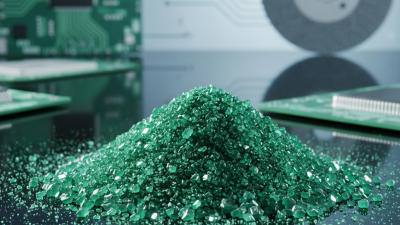
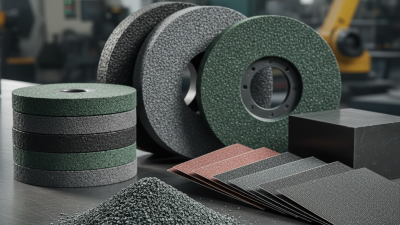
China Top 10 Green Silicon Carbide Suppliers? — Green Silicon Carbide: Properties, Uses, and Industry Applications

Green silicon carbide has a typical Mohs hardness of approximately 9.2–9.3, making it one of the hardest industrial abrasives. Its hardness, high thermal conductivity, chemical stability, and sharp cutting ability support applications such as precision grinding, wafer processing, ceramics, refractory products, and surface finishing of hard materials.

How China’s Top Green Silicon Carbide Suppliers Are Selected

China Top 10 Green Silicon Carbide Suppliers?

Selecting China’s leading green silicon carbide suppliers requires more than comparing prices. The USGS Mineral Commodity Summaries 2024 identifies China as a major global producer of silicon carbide. Grand View Research reported that the global silicon carbide market was valued at approximately USD 3.56 billion in 2023. Demand is expanding across abrasives, ceramics, refractories, and power electronics.

The selection begins with material evidence. Buyers should verify silicon carbide purity, crystal structure, particle-size distribution, and magnetic contamination. Each batch should include a traceable certificate of analysis. Independent testing under ISO/IEC 17025 strengthens credibility. It also exposes inconsistencies that factory documents may miss. Small details matter, such as sealed packaging, clear lot numbers, and clean storage areas.

Plant audits reveal practical experience. Review furnace controls, crushing equipment, screening accuracy, dust collection, and wastewater procedures. ISO 9001 supports process discipline, while ISO 14001 indicates structured environmental management. These certificates help, but they are not final proof. Ask for recent test records, production capacity, export experience, and realistic delivery schedules. Compare samples from several batches, not one attractive shipment. A supplier with stable results is usually more valuable than one offering the lowest quotation.

No ranking is perfect. Some published market estimates use different definitions of green silicon carbide. Buyers should therefore combine report data, laboratory results, site observations, and customer references before making a final decision.

Profiles of the Top 10 Green Silicon Carbide Suppliers in China

Profiles of the Top 10 Green Silicon Carbide Suppliers in China

China remains a major production base for green silicon carbide, especially for precision abrasives, ceramics, and cutting tools. The USGS Mineral Commodity Summaries 2024 identifies China as one of the leading global silicon carbide producers. Industry estimates also place the wider silicon carbide market above USD 2 billion in 2023, according to Fortune Business Insights. These figures include semiconductor-grade materials, so abrasive-grade demand requires careful interpretation.

The top ten supplier profiles should examine more than export volume. Strong candidates usually show stable furnace operation, controlled crystal purity, and consistent particle sizing. Green silicon carbide with about 99% SiC content is commonly selected for grinding hard alloys, glass, and advanced ceramics. Laboratory evidence matters. Look for ISO 9001 systems, batch certificates, magnetic impurity controls, and traceable sieve analysis. Some factories also provide FEPA or JIS grain-size documentation, which helps buyers compare samples fairly.

Production scale can mislead. A large catalogue does not prove uniform quality. A supplier may offer many grit sizes but struggle with repeat orders. That weakness deserves attention. The profiles should therefore compare annual capacity, in-house crushing, coating options, packaging protection, and technical response time. Freight distance and moisture-resistant bags also affect delivered cost. Ranking suppliers is not perfectly stable; energy prices, furnace maintenance, and export demand can change results within one year. Careful buyers should test several lots before approving long-term supply.

China Top 10 Green Silicon Carbide Suppliers? - Profiles of the Top 10 Green Silicon Carbide Suppliers in China

Profile Primary Production Region Typical Product Forms Typical SiC Content Common Grit and Size Range Applicable Standards Main Application Focus Customization Capability Export Readiness Overall Market Fit
Supplier Profile 01 Henan Province Fused green silicon carbide grains, powders and microgrits Typically 98.5%–99.0% SiC, depending on grade Macrogrits F12–F80; microgrits commonly in the F230–F1200 range FEPA F-series; JIS and ANSI size classifications available by order Refractory production, coated abrasives, grinding wheels and precision lapping Particle-size distribution, magnetic separation, washing and packaging options Bulk bags, paper bags and private-label-neutral packaging; suitable for container shipment ★★★★★
Supplier Profile 02 Gansu Province Green SiC blocks, crushed grains and abrasive powders Typically 98.0%–99.0% SiC F8–F120 macrogrits and fine powders below 63 μm FEPA, JIS and ANSI grading systems commonly supported Refractory bricks, kiln furniture, abrasive blasting and stone processing Custom crushing ratios, screened fractions and low-dust processing Experienced in bulk mineral-material logistics and industrial export packing ★★★★☆
Supplier Profile 03 Ningxia Hui Autonomous Region High-purity green SiC powder, microgrit and precision abrasive material Typically 99.0%–99.5% SiC for high-purity grades Fine powders and microgrits from approximately 1–63 μm FEPA microgrit designations; customer-specific sieve or laser-particle analysis Semiconductor-related processing, advanced ceramics, lapping and wire-saw applications Fine classification, acid or water washing, narrow particle-size distribution Technical documentation and laboratory test reports generally available on request ★★★★★
Supplier Profile 04 Inner Mongolia Green silicon carbide grains, powders and refractory-grade material Typically 98.0%–99.0% SiC F12–F100 macrogrits; fine powders commonly from 45 μm downward FEPA F-series, JIS R 6001 and ANSI B74.12 options Steelmaking refractories, castables, ceramic components and anti-skid surfaces Custom bulk density, grain shape, screening and moisture-control requirements Competitive for full-container orders and standard industrial packaging ★★★★☆
Supplier Profile 05 Shandong Province Precision green SiC microgrits, powders and coated-abrasive feedstock Typically 98.5%–99.5% SiC Microgrits F230–F1200 and powder grades below 20 μm FEPA, JIS and ANSI; certificate of analysis commonly supplied Precision grinding, semiconductor slicing support, ceramics and optical finishing High-precision classification, de-ironing, washing and customized particle distribution Strong suitability for smaller technical lots and regular export replenishment ★★★★★
Supplier Profile 06 Hunan Province Green SiC powders, fine grains and ceramic-grade raw material Typically 98.0%–99.0% SiC F24–F120 grains and fine powders from approximately 10–75 μm FEPA and customer-specific technical specifications Technical ceramics, wear-resistant coatings, thermal-management components and abrasives Custom calcination, powder blending, moisture limits and packaging formats Suitable for technical exports with pre-shipment inspection requirements ★★★★☆
Supplier Profile 07 Sichuan Province Green SiC grains, powders and refractory-grade crushed material Typically 98.0%–99.0% SiC F12–F120 grains and fine powders commonly below 75 μm FEPA F-series; JIS and ANSI equivalents available for selected sizes Refractory mixes, ceramic kiln components, abrasive tools and surface preparation Custom grain shape, screening, dust removal and bulk-density control Suitable for palletized and containerized shipments to Asia and other markets ★★★★☆
Supplier Profile 08 Jiangsu Province Fine green SiC powder, microgrit and engineered abrasive blends Typically 99.0%–99.5% SiC for selected fine grades Approximately 0.5–63 μm; narrow-distribution grades available FEPA microgrits, JIS R 6001 and buyer-defined particle specifications Precision lapping, advanced ceramics, photovoltaic-related processing and polishing Laser diffraction analysis, narrow classification and tailored surface treatment Well suited to documentation-intensive technical procurement ★★★★★
Supplier Profile 09 Guangdong Province Processed green SiC powders, abrasive grains and ceramic-grade material Typically 98.5%–99.5% SiC F16–F120 macrogrits and fine powders from approximately 5–63 μm FEPA, JIS and ANSI formats supported according to product line Electronics-related ceramics, precision abrasives, polishing and cutting tools Small-batch sampling, custom packaging, blending and particle-size control Convenient for mixed-SKU orders and smaller-volume international purchasing ★★★★☆
Supplier Profile 10 Shanxi Province Green SiC grains, powders, briquettes and refractory additives Typically 98.0%–99.0% SiC F8–F100 grains, powder grades and application-specific screened fractions FEPA, JIS and ANSI classifications available by specification Refractory castables, foundry materials, abrasive blasting and wear-resistant products Custom sizing, blended grades, low-moisture packing and bulk delivery Strong fit for industrial-volume orders and standard export documentation ★★★★☆
Specification ranges are typical industry ranges for green silicon carbide products in China. Actual purity, particle-size distribution, packaging, testing method and compliance documentation should be confirmed through a current certificate of analysis and pre-shipment sample approval.

Comparing Product Quality, Grades, Capacity, and Certifications

China’s top ten green silicon carbide suppliers should be compared through evidence, not promotional claims. Product quality begins with SiC purity, crystal structure, hardness, and stable particle size. A useful supplier should provide recent batch reports, not only a standard specification sheet. Look for clear grades, such as abrasive powders, coarse grains, and micronized material. Each grade should match its intended use, including cutting, grinding, ceramics, or refractory production.

Capacity also needs careful checking. A large annual figure may hide limited fine-powder capability. Ask about monthly output, furnace type, screening lines, and available stock. Quality can change when production is rushed. Certifications add credibility, especially ISO 9001 for quality management and ISO 14001 for environmental systems. However, a certificate alone proves little without traceable testing records, inspection procedures, and consistent delivery history. This is where many comparisons become too generous.

Tips: Request three recent COAs from different batches. Compare purity, free silicon, iron content, moisture, and particle distribution. Ask for samples packed in labeled bags with production dates. Check whether the supplier can maintain the same grade during peak seasons. I would also verify certificates directly with the issuing body. My own assessment would leave room for doubt, because laboratory results and factory performance do not always match. A short trial order may reveal more than a polished presentation.

How to Choose the Right Chinese Green Silicon Carbide Supplier

Choosing the right Chinese green silicon carbide supplier requires more than comparing prices. A strong supplier should provide clear data on silicon carbide purity, grain size, magnetic content, moisture, and bulk density. Request a recent certificate of analysis for each batch. Do not rely only on website claims.

Ask for a small sample before placing a large order. Test its color, particle distribution, cutting performance, and consistency under your actual process conditions. Green silicon carbide should look uniform, with controlled grains and minimal foreign particles. A supplier with practical experience will explain how raw materials, crushing, screening, and packing affect performance.

Documentation matters. Check production capacity, quality-control procedures, traceability, inspection records, and export experience. Ask whether the supplier can maintain the same specification across several shipments. Packaging should protect the abrasive from moisture, tearing, and contamination during long transport. A factory video is useful, but an independent inspection is stronger evidence.

Communication reveals technical reliability. Can the sales engineer answer specific questions without vague promises? Can they explain tolerance limits and replacement procedures? I have found that the lowest quotation often hides unstable grading or weak after-sales support. That lesson is easy to ignore.

Request a written quotation with Incoterms, lead time, payment terms, packing details, and testing standards. Compare ten suppliers using the same checklist. Leave room for doubt. A polished sample may not represent routine production. Verify it.